Reflections from Phase 1: Core Principles
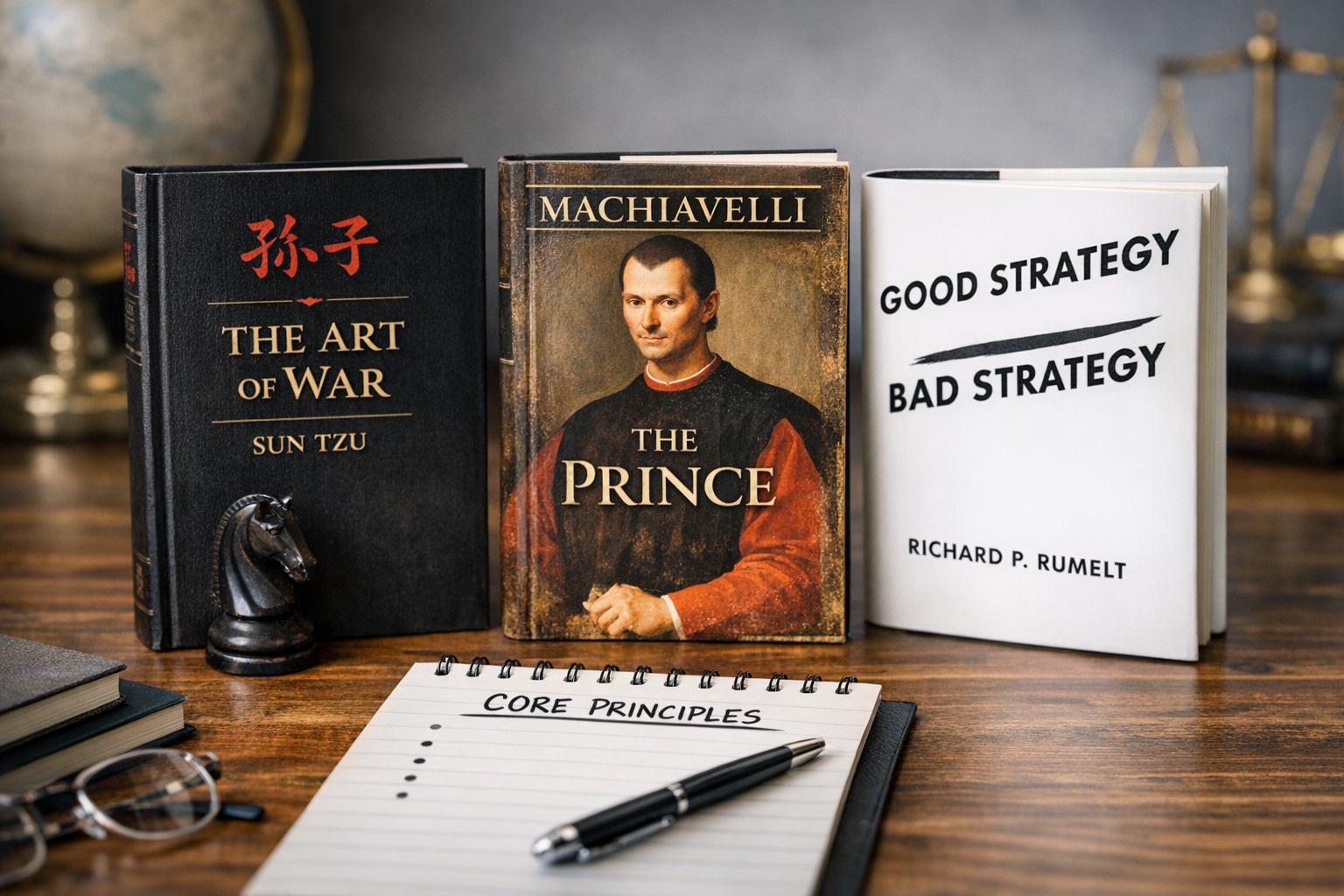
I’ve now completed the first phase of this strategy reading project: The Art of War, The Prince, and Good Strategy Bad Strategy.
Three very different books, but together they reinforced one simple point: strategy starts with seeing clearly.
Sun Tzu sharpened my view of positioning. The strongest move is often not direct confrontation, but shaping the terrain before action becomes necessary. In work, that means understanding the client, the internal politics, the timing, the incentives and the real decision criteria before pushing for an outcome. In life, it means choosing battles carefully and not confusing motion with progress.
Machiavelli was an interesting read, slightly uncomfortable but useful for exactly that reason. He strips away the polite version of how power works and forces a harder look at incentives, perception, loyalty, fear and self-interest. The lesson I took from it is not to become cynical but to be less naive. Good intentions matter but they do not remove power dynamics from the room. How things are perceived, who has power and what people are protecting all shape what is possible.
Rumelt tied the phase together. Good Strategy Bad Strategy is the most practically useful of the three because it forces strategy into something concrete: start with a real diagnosis, choose a clear direction and follow through with aligned action. That sounds simple but it cuts through a lot of noise. Many “strategies” are really ambitions, slogans or scattered initiatives. Real strategy requires choice.
The main reflection from Phase 1 is this: poor strategy usually begins with poor diagnosis. If I misunderstand the situation, everything that follows becomes weaker – the positioning, the politics, the execution and the outcome.
Applying the ideas made this clear. In a few current situations, both professional and personal, I found myself asking better questions: What is really going on here? Where is the leverage? Who has influence? What conflict should be avoided? What action would actually move the situation forward?
My main takeaway: strategy is not about grand plans or clever moves. It is about reading reality accurately – seeing the terrain, understanding the incentives, identifying the real problem and point of leverage, then acting with coherence on the few actions that matter.
– Martin